

Commercial vs Resedential Property Investment
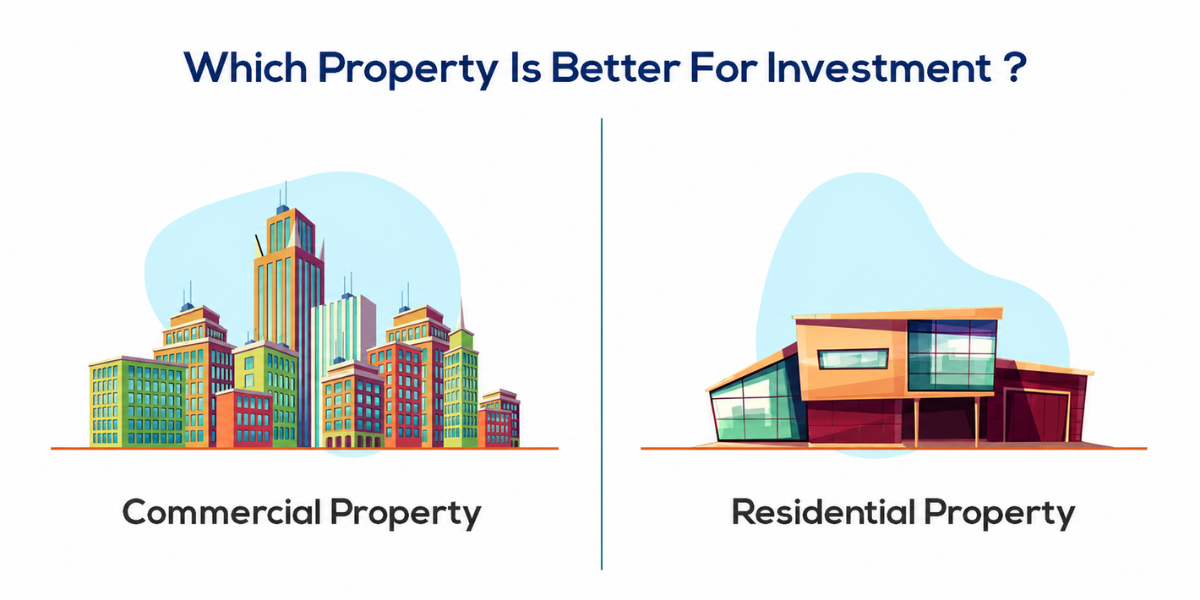
Commercial Property vs Residential Property Investment – PAJASA Apartments
Commercial Property vs Residential Property Investment: Which Investment Offers Better Returns in 2026?
Real estate remains one of the most preferred investment options for building long-term wealth. However, one of the biggest dilemmas investors face is commercial property vs residential property investment. If you are a begineer then you must know Why You Must Invest in Real Estate. Both asset classes offer unique advantages, but the right choice depends on your investment goals, budget, risk appetite, and expected returns.
If you’re looking for higher rental yields and long-term leases, commercial property often stands out. On the other hand, if you prefer steady demand, lower risk, and easier financing, residential property can be the better option.
In this comprehensive guide, we’ll compare commercial and residential property investments across returns, risks, appreciation, taxation, maintenance, and much more to help you make an informed decision.
Commercial Property Investment
Commercial property investment involves purchasing business-use properties such as offices, retail shops, warehouses, or industrial spaces to earn rental income and long-term capital appreciation. It typically offers higher rental yields but requires a larger investment and carries higher market risk.
Residential Property Investment
Residential property investment involves buying homes, apartments, villas, or serviced apartments to generate rental income or benefit from property value appreciation. It is generally considered a lower-risk investment with easier financing and consistent demand from tenants.
Quick Comparison: Commercial vs Residential Property
| Feature | Commercial Property | Residential Property |
|---|---|---|
|
Rental Yield |
6%–10% |
2%–4% |
|
Initial Investment |
High |
Moderate |
|
Lease Duration |
3–15 years |
11 months–3 years |
|
Vacancy Risk |
Higher |
Lower |
|
Maintenance Responsibility |
Often Tenant |
Mostly Owner |
|
Capital Appreciation |
Moderate to High |
High in developing areas |
|
Financing |
More Difficult |
Easier |
|
Liquidity |
Lower |
Higher |
|
Tenant Type |
Businesses |
Individuals/Families |
|
Income Stability |
High with quality tenants |
Generally stable |
What is Commercial Property Investment?
Commercial property investment involves purchasing real estate that is used for business or commercial activities to generate rental income and long-term capital appreciation. These properties are leased to businesses, retailers, or corporate organizations and typically offer higher rental yields, longer lease terms, and more stable cash flow than residential properties. If you are from India, here’s a complete guide about How to Invest in Real Estate in India.
Although commercial investments require a higher initial investment and involve greater market risk, they can provide attractive returns for long-term investors.
Types of Commercial Property Investments:
- Office Spaces – Corporate offices, IT parks, and business centers leased to companies.
- Retail Properties – Shops, showrooms, shopping malls, and high-street retail spaces.
- Industrial Properties – Factories, manufacturing units, and industrial sheds.
- Warehouses & Logistics Parks – Storage facilities and distribution centers for logistics and e-commerce businesses.
- Hospitality Properties – Hotels, resorts, and serviced Apartments used for commercial purposes.
- Mixed-Use Developments – Properties that combine commercial spaces with residential or recreational facilities.
What is Residential Property Investment?
Residential property investment involves purchasing real estate intended for living purposes to earn rental income, benefit from long-term capital appreciation, or both. These properties are leased to individuals or families and are generally considered a safer and more accessible investment option due to consistent housing demand, lower entry costs, and easier financing. Residential properties are ideal for investors seeking steady returns and long-term wealth creation.
Types of Residential Property Investments
- Apartments – Flats in residential buildings, suitable for rental income and resale.
- Independent Houses – Standalone homes offering greater privacy and long-term appreciation.
- Villas – Premium residential properties with larger living spaces and luxury amenities.
- Studio Apartments – Compact homes popular among students, professionals, and singles.
- Serviced Apartments – Fully furnished apartments designed for short-term and long-term stays, offering higher rental potential.
- Holiday Homes – Vacation properties located in tourist destinations that can generate seasonal rental income.
Commercial Property vs Residential Property: Detailed Comparison
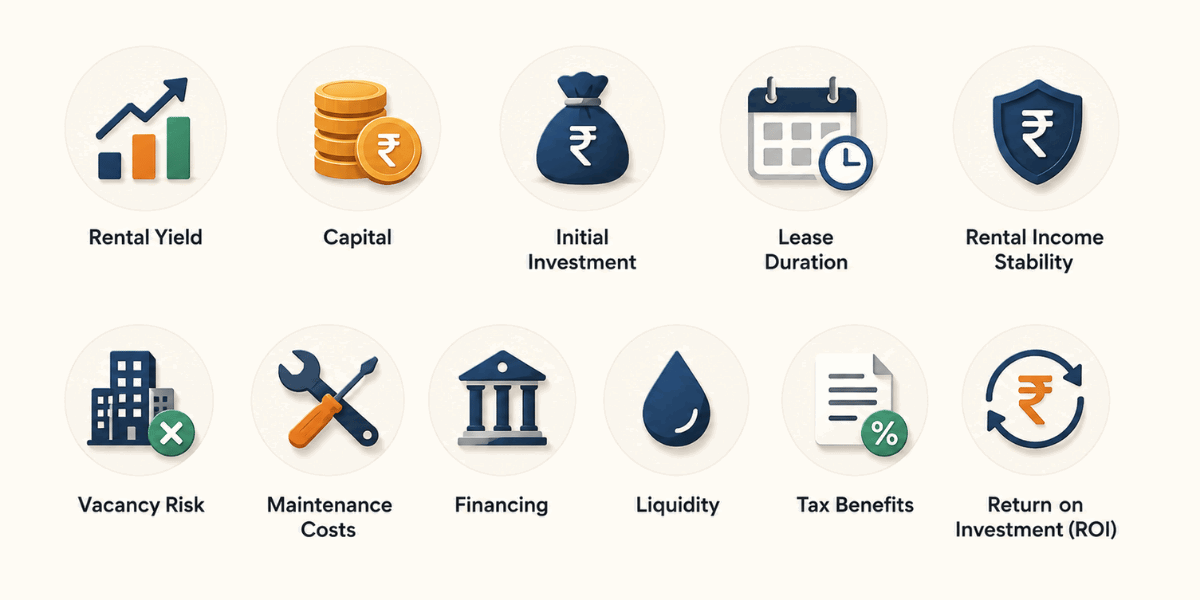
Commercial Property vs Residential Property Detailed Comparison- PAJASA Apartments
-
Rental Yield
- Commercial Property: Offers higher rental yields, typically between 6% and 10%, making it ideal for generating regular passive income.
- Residential Property: Rental yields usually range from 2% to 4%, but demand remains relatively stable throughout the year.
-
Capital Appreciation
- Commercial Property: Property value increases based on business growth, infrastructure development, and demand for commercial spaces.
- Residential Property: Appreciation is driven by population growth, urban expansion, and improvements in local amenities.
-
Initial Investment
- Commercial Property: Requires a higher upfront investment and additional costs for interiors, maintenance, or fit-outs.
- Residential Property: Has a lower entry cost, making it more affordable for first-time investors.
-
Lease Duration
- Commercial Property: Lease agreements usually last 3 to 15 years, ensuring long-term rental income.
- Residential Property: Leases are generally shorter, ranging from 11 months to 3 years, leading to more frequent renewals.
-
Rental Income Stability
- Commercial Property: Long-term corporate leases provide predictable and stable rental income over several years.
- Residential Property: Income is generally consistent but may fluctuate due to tenant turnover or short vacancy periods.
-
Vacancy Risk
- Commercial Property: Finding new business tenants can take time, resulting in longer vacancy periods.
- Residential Property: Homes usually experience lower vacancy rates because housing demand remains consistently high.
-
Maintenance Costs
- Commercial Property: Tenants often bear operational and maintenance expenses as part of the lease agreement.
- Residential Property: Property owners are typically responsible for repairs, renovations, and regular upkeep.
-
Financing
- Commercial Property: Loans generally have higher interest rates and lower financing limits compared to residential properties.
- Residential Property: Home loans are easier to obtain, with competitive interest rates and flexible repayment options.
-
Liquidity
- Commercial Property: Selling a commercial property may take longer due to a smaller pool of potential buyers.
- Residential Property: Residential properties are generally easier and faster to sell because of broader market demand.
-
Risk
- Commercial Property: Returns depend on business performance and economic conditions, making it relatively higher risk.
- Residential Property: Considered a safer investment due to consistent housing demand and lower market volatility.
-
Tenant Profile
- Commercial Property: Tenants are businesses, corporate offices, retailers, or industrial companies with long-term leasing needs.
- Residential Property: Tenants include families, students, professionals, and individuals seeking accommodation.
-
Tax Benefits
- Commercial Property: Investors may claim deductions on eligible business expenses, depreciation, and loan interest, depending on tax laws.
- Residential Property: Homeowners can avail tax benefits on eligible home loan principal and interest payments under applicable regulations.
-
Return on Investment (ROI)
- Commercial Property: Offers higher rental income and stronger cash flow, resulting in potentially better overall returns.
- Residential Property: Provides moderate rental returns while benefiting from long-term capital appreciation.
-
Management
- Commercial Property: Requires professional lease management but usually involves fewer tenant changes over time.
- Residential Property: Often requires more frequent tenant management, maintenance, and lease renewals.
-
Best For
- Commercial Property: Best suited for experienced investors seeking higher rental income and long-term wealth creation.
- Residential Property: Ideal for first-time investors looking for affordability, stability, and steady long-term growth.
Advantages and Disadvantages of Commercial Property Investment
| Advantages of Commercial Property Investment | Disadvantages of Commercial Property Investment |
|---|---|
|
Higher rental yields and better cash flow |
High initial investment requirement |
|
Long-term lease agreements with stable income |
Higher vacancy risk if tenants vacate |
|
Professional tenants with lower tenant turnover |
More sensitive to economic downturns |
|
Periodic rent escalation increases returns |
Commercial loans are harder to obtain |
|
Potential for higher ROI and capital appreciation |
Lower liquidity and longer selling time |
Advantages and Disadvantages of Residential Property Investment
| Advantages of Residential Property Investment | Disadvantages of Residential Property Investment |
|---|---|
|
Lower initial investment and easier financing |
Lower rental yields compared to commercial properties |
|
Consistent demand and lower vacancy risk |
Shorter lease terms and frequent tenant turnover |
|
Easier to buy, sell, and manage |
Higher maintenance responsibility for owners |
|
Good long-term capital appreciation |
Rental income may grow at a slower pace |
|
Suitable for first-time investors and long-term wealth creation |
Tenant-related issues and regular upkeep can increase management effort |
Commercial or Resedential Investments: Which Investment is Best for Beginners?
For most first-time investors, residential property investment is the better choice because it requires a lower initial investment, offers easier financing, and carries less risk than commercial real estate. Residential properties also have consistent demand, making it easier to find tenants and maintain steady rental income.
However, if you have a larger investment budget and are looking for higher rental yields and long-term lease agreements. Here are some Simple Ways to Invest in Real Estate. Commercial property can be a rewarding option. Ultimately, the best investment depends on your financial goals, risk tolerance, and investment horizon. Many investors begin with residential property and gradually diversify into commercial real estate as their portfolio grows.
Investment Tips Before Buying Any Property
- Research the location and future infrastructure projects.
- Evaluate rental demand and occupancy trends.
- Calculate rental yield and expected ROI.
- Review legal approvals and property documents.
- Understand maintenance and operating costs.
- Compare financing options and loan terms.
- Assess resale potential before investing.
- Diversify your investments instead of concentrating on a single asset.
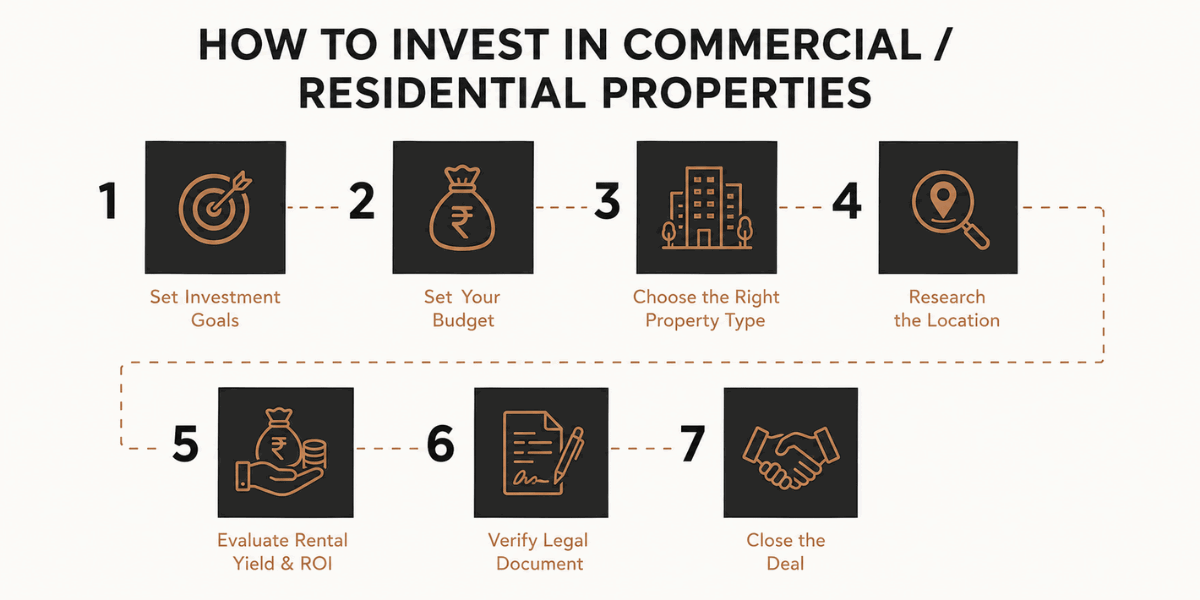
How to invest in real estate – PAJASA Apartments
How to Invest in Commercial Property?
Investing in commercial property can be a profitable way to generate steady rental income and build long-term wealth. The key to a successful investment is choosing the right property in a high-demand business location, evaluating its earning potential, and conducting thorough financial and legal due diligence. Following a systematic approach helps minimize risks and maximize returns.
Steps to Invest in Commercial Property:
- Define Your Investment Goals – Decide whether you want regular rental income, capital appreciation, or both.
- Set Your Budget – Determine your investment capacity and financing options, including commercial property loans.
- Choose the Right Property Type – Invest in office spaces, retail shops, warehouses, industrial units, or business parks based on market demand.
- Research the Location – Look for areas with strong business activity, good connectivity, and future infrastructure development.
- Evaluate Rental Yield & ROI – Compare expected rental income, occupancy rates, and long-term appreciation before investing.
- Verify Legal Documents – Ensure the property has clear titles, approvals, and complies with all legal requirements.
- Select Reliable Tenants – Leasing to established businesses can provide stable income through long-term agreements.
- Monitor and Manage Your Investment – Regularly review market trends, maintain the property, and optimize rental returns over time.
How to Invest in Residential Property
Residential property investment is one of the most popular ways to build long-term wealth and earn passive income. By choosing the right property, researching the location, and evaluating its rental and appreciation potential, investors can generate stable returns while minimizing risks. A well-planned investment strategy ensures consistent income and long-term financial growth.
Steps to Invest in Residential Property
- Define Your Investment Goals – Decide whether your focus is rental income, capital appreciation, or both.
- Set Your Budget – Assess your finances and explore home loan options to determine your investment capacity.
- Choose the Right Property Type – Select from apartments, villas, independent houses, serviced apartments, or plots based on your objectives.
- Research the Location – Invest in areas with strong infrastructure, schools, hospitals, public transport, and future development plans.
- Evaluate Rental Demand – Analyze occupancy rates, rental income potential, and tenant demand in the locality.
- Verify Legal Documents – Check the property’s title, approvals, RERA registration (where applicable), and other legal documents.
- Calculate Total Costs – Consider registration fees, taxes, maintenance charges, and other ownership expenses before purchasing.
- Manage Your Investment – Maintain the property, screen tenants carefully, and review market trends to maximize long-term returns.
Commercial vs Residential Property: Who Should Invest?
| Investor Type | Recommended Investment |
|---|---|
|
First-time Investor |
Residential Property |
|
Passive Income Seeker |
Commercial Property |
|
Long-term Wealth Builder |
Commercial Property & Residential Property |
|
Low-Risk Investor |
Residential Property |
|
High-Net-Worth Individual |
Commercial Property |
|
Retiree Seeking Stable Income |
Commercial Property (with quality tenants) |
|
Young Professional |
Residential Property |
|
Portfolio Diversification |
Commercial Property & Residential Property |
How to Invest in Serviced Apartments

PAJASA Serviced Apartments
Investing in serviced apartments begins with identifying your financial goals and selecting a property in a high-demand location, such as a business district, IT hub, or popular corporate travel destination. Choose a fully furnished apartment with modern amenities, evaluate its rental yield, occupancy potential, and long-term appreciation prospects, and verify all legal documents before purchasing. To maximize returns and enjoy a hassle-free investment, partner with a professional property management company that can handle guest bookings, housekeeping, maintenance, tenant management, and day-to-day operations. This allows you to generate consistent rental income while benefiting from the property’s long-term value appreciation. If you have invested in serviced apartments then The Role of Property Management in Serviced Apartments is much higher.
Frequently Asked Questions (FAQs)
Is commercial property a better investment than residential property?
Commercial property generally offers higher rental yields and longer lease terms, while residential property is easier to finance
Which property type gives higher rental income?
Commercial properties typically provides higher rental yields of 6%–10%
Is residential property safer than commercial property?
Yes. Residential investments are generally considered less risky because housing demand
Can beginners invest in commercial property?
Yes, but commercial investments usually require higher capital and involve greater risks
Which property is easier to sell?
Residential properties are generally more liquid due to a larger pool of buyers and easier access to home financing.
Final Thoughts
The choice between commercial property vs residential property investment depends on your financial goals, investment horizon, and risk tolerance. Commercial properties such as serviced apartments are ideal for investors seeking higher rental income, longer lease agreements, and stronger cash flow, while residential properties offer greater affordability, lower risk, easier financing, and consistent demand. If you have allready invested in a property which is underperforming, here is a complete guide to Turn an Underperforming Property into a Cash-Flow Machine
Rather than viewing it as an either-or decision, many successful investors build wealth by combining both asset classes. A diversified real estate portfolio can provide the stability of residential investments alongside the income potential of commercial properties, helping you achieve balanced long-term growth.