

Elephanta Caves Mumbai
A Perfect Guide to Elephanta Caves: The UNESCO Heritage Site You Must Visit
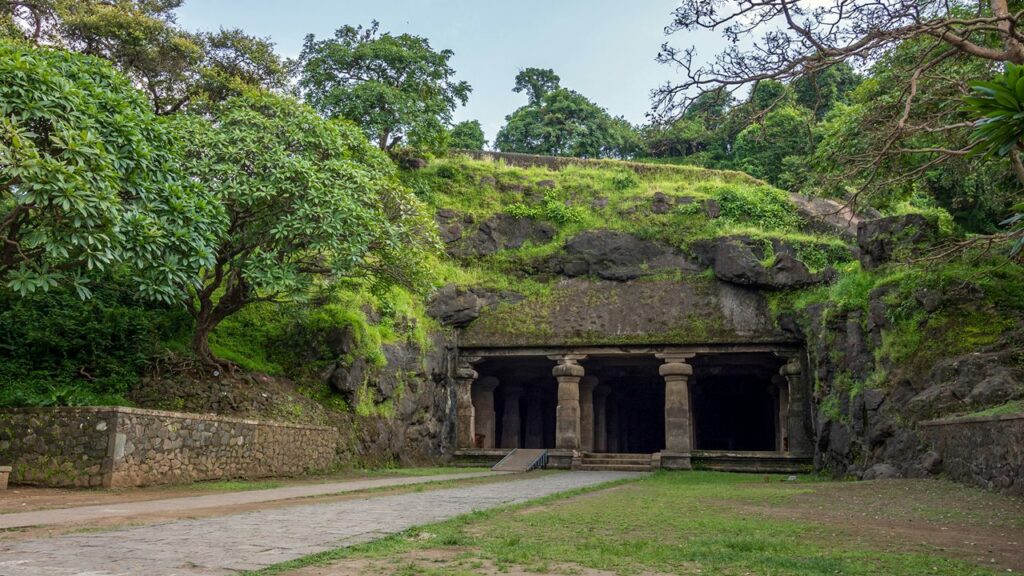
The Elephanta Caves are located on Gharapuri Island, 10 km east of Mumbai in the Arabian Sea. The site covers two hillocks connected by a saddle. Seven Hindu caves and two Buddhist caves exist across the area. Cave 1 is the main cave, at 39 meters deep and 27 meters square. This cave holds the famous Trimurti Sadashiva sculpture with three faces representing Brahma, the creator, Vishnu, the preserver, and Shiva, the destroyer.
The island spans 7 km by 4 km. Local basalt rock served as the material for the carvings. Portuguese explorers named the island Elephanta in 1534 after finding a large stone elephant statue near the jetty. They moved this statue to Mumbai’s Victoria Garden in 1814. British forces took control of the island in 1661 after defeating the Portuguese. Early surveys by James Fergusson in the 1840s documented the caves. Elephnata Caves Entry fees stand at Rs. 40 for Indian citizens and Rs. 600 for foreign nationals.
Over 1 million visitors come each year. If you are a business traveller looking for a comfortable stay in Mumbai, PAJASA service apartments offer well-equipped properties across prime locations in the city. Additionally, these apartments are ideal for corporate and long-term stays, ensuring both convenience and comfort. Do check out our apartments for a seamless stay experience.
- Total caves: 7 Hindu, 2 Buddhist.
- Main cave dimensions: 39m deep, 27m square.
- Key sculpture height: Trimurti Sadashiva at 6m.
- Construction material: Basalt rock from the island.
- Annual visitors: Over 1 million.
All about History of Elephanta Caves
Work on the Elephanta Caves first started in the mid-5th century under Kalachuri patronage. Meanwhile, Shaivite monks actively used the site right up until the 8th century. Later, the Portuguese arrived in 1534 and caused damage by using sculptures for target practice, along with neglect. Additionally, salt from sea air erodes faces over time. Surprisingly, the British then captured Bombay, including the island, in 1661. James Fergusson published drawings in the 1840s. The government declared it a protected monument in 1909. UNESCO added it to the World Heritage list in 1987 as Cultural Site number 244. Restoration by ASI finished the main cave work by 1988. Recent conservation addresses pollution from Mumbai ferries.
- Construction period: 450-750 AD.
- Portuguese control: 1534-1661.
- British surveys: James Fergusson (1840s).
- UNESCO listing: 1987 (Site No. 244).
Architecture of Elephanta Caves
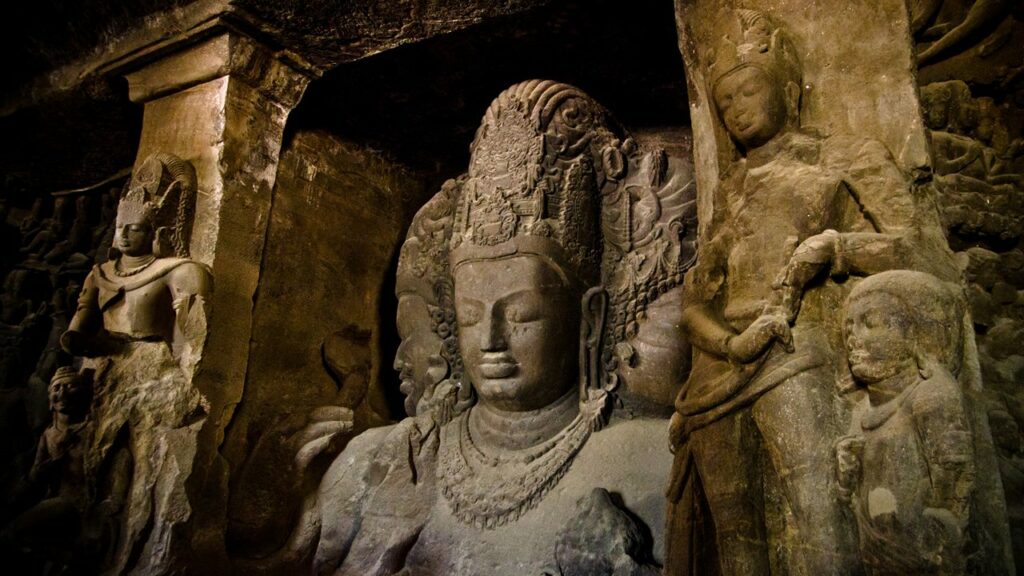
Cave 1 spans 130 feet by 130 feet with a pillared hall leading to a cross-shaped shrine. East and north entrances feature porticos with dhvaja-stambhas. Twenty-four octagonal pillars stand in four rows of six. Side panels measure 4m to 6m high, showing Shiva in forms like Nataraja dancing and Yogishvara in meditation. The Trimurti occupies the south wall facing the entrance. Sanctum follows sarvatobhadra plan with entrances on all sides. Buddhist Cave 3 has a chaitya hall with a stupa. Cave 8 contains a large vihara with cells. Courtyards hold square cisterns with steps. Rock ceilings show tool marks from chiselling.
Despite centuries of exposure to harsh elements, the structural pillars of the Elephanta Caves remain remarkably intact. As a result, this highlights the extraordinary strength and engineering excellence of this ancient rock-cut site.
- Pillars in Cave 1: 24 octagonal.
- Entrances: East, north, west corridor.
- Architectural style: Rock-cut vihara with mandapa.
- Sculptures: 18 main panels in Cave 1.
Where is Elephanta Caves located in Mumbai?
Elephanta Island lies at the entrance of Mumbai Harbour, with coordinates 18°58′N 72°56′E. Access requires a ferry from the Gateway of India main jetty in Colaba. No airport, road, or rail connects directly to the island. From Chhatrapati Shivaji Maharaj International Airport, taxis cover 25 km to Gateway in 45-90 minutes, depending on traffic. If you’re new to Mumbai, first, check out this complete Mumbai travel guide. Moreover, it covers the best places to visit, top attractions, local experiences, and essential tips. As a result, you’ll explore the city like a pro.
How to reach Elephanta Caves?
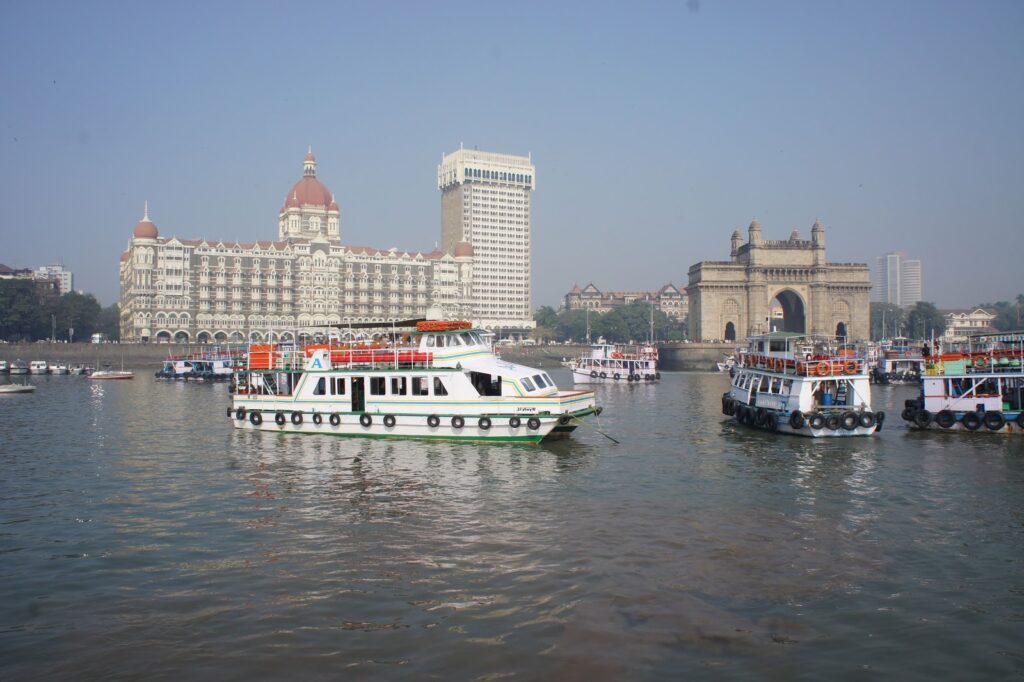
Fares range from Rs. 500 to Rs. 800. First, take local trains from CST or Churchgate to Chhatrapati Shivaji Maharaj Terminus. Then, walk 2 km or grab a quick taxi to Gateway of India. Meanwhile, suburban trains run every 5–10 minutes on the Harbour Line. Furthermore, MTDC and private ferry services start at 9 AM, with the last boat from Elephanta island at 5:30 PM.
Return tickets cost Rs. 200 for adults, Rs. 100 for children, and Rs. 20 for 60+ citizens. Next, the journey takes 45–60 minutes across the harbour. Meanwhile, launches carry 100 passengers each. For example, during peak season, boats depart every 30 minutes. Additionally, private speed boats cost Rs. 3,000–5,000 for groups of 6–10. After reaching the jetty, climb 120 concrete steps or ride the toy train 0.6 km uphill for Rs. 10 one way. Moreover, steps have handrails and rest platforms. Finally, island paths paved with stone lead to caves 500m further. No cars or bikes allowed on the island. Jetty has ticket counters, lockers, and toilets.
- Airport distance: 25 km to Gateway.
- Train stations nearby: CST, Churchgate.
- Ferry distance: 10 km one way.
- Ferry frequency: Every 30 min during peak hours.
- Steps to caves: 120 with toy train option.
- Ticket prices: 200 adult returns.
Which is the Best Time to Visit Elephanta Caves?
October through March provides dry weather with temperatures 20-30°C. Early mornings offer cool air for climbing steps and cave tours. Weekdays limit crowds to under 500 visitors daily. Post-monsoon October brings clear harbour views ideal for photography. First, December to February sees peak tourist numbers but offers comfortable conditions. However, avoid afternoons when humidity rises above 70%. Meanwhile, the monsoon from June to September halts ferries due to high waves and rain. In contrast, summer months from April to May record 35–40°C with intense sun on exposed steps. Fortunately, the first ferry at 9 AM allows full day exploration before 5 PM closure. Additionally, sunset views from the island hill shine in winter. Therefore, carry water and hats year-round. Finally, the sound and light show runs from November to February evenings for Rs. 250.
- Winter (Oct-Mar): Dry, 20-30°C, best season.
- Monsoon (Jun-Sep): Ferries cancelled.
- Summer (Apr-May): 35-40°C, high humidity.
- Ideal time: Mornings, weekdays.
- Operating hours: 9:30 AM – 5:00 PM, closed Mondays.
Things to do in Elephanta Caves Mumbai.
To begin with, tour Cave 1 starting at the iconic Trimurti Sadashiva sculpture. Spend 45 minutes noting details like Shiva’s third eye. Explore Caves 2-5 for unfinished shrines and pillars. Visit Buddhist Caves 7-8, noting stupa architecture differences from Hindu caves. Climb the northern hill for 360-degree harbour views and cannon remnants. Walk the eastern site from the Portuguese era. Browse a museum displaying broken panels, inscriptions, and scale models. Hire a certified guide at the entrance for Rs. 150 per half hour, explaining iconography. Take photos without flash, respecting the no-tripod rule. Watch ferries arrive from the jetty viewpoint. Spot monkeys, deer, and peacocks along paths. Buy an entry ticket at the cave counter after the train ride. Allow 3-4 hours total visit. Children enjoy the toy train ride the most. Evening sound show narrates cave history with lights on sculptures.
- Main cave tour: 45 min.
- Hill climb: 20 min.
- Museum visit: 15 min.
- Guide fee: 150/30 min.
- Sound show: Evening Nov-Feb.
After visiting the Elephanta Caves, if you have extra time, consider exploring the best places to visit near Mumbai. Specifically, this guide covers top nearby tourist destinations, weekend getaways, and must-visit spots around Mumbai.
Places to visit near Elephanta Caves, Mumbai
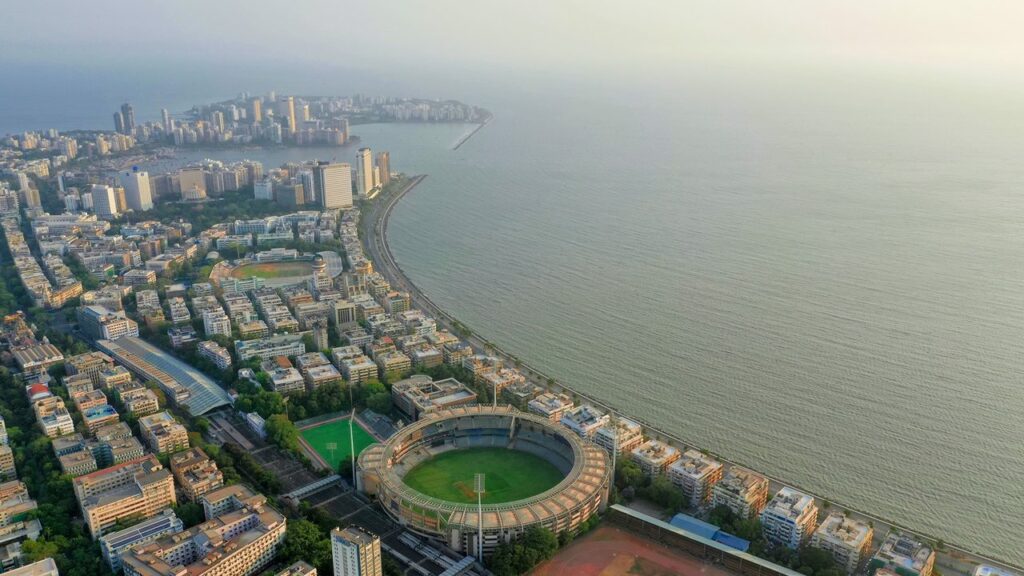
- Gateway of India: Ferry starting point 10 km away.
- Marine Drive: 15 km from Gateway along the coast.
- Colaba Causeway market: 2 km from the jetty area.
- Chhatrapati Shivaji Maharaj Vastu Sangrahalaya museum: Near Gateway.
Firstly, if you’re looking to explore the best places to visit in Mumbai, this guide will help you discover some of the most exciting and must-visit destinations near Mumbai.
Shopping & Street Experience at Elephanta Caves UNESCO site
Vendors line 120 steps from the jetty selling brass diyas, stone idols, and cave replica models for Rs. 50 to Rs. 500. Postcards of Trimurti cost Rs. 10 per set. Shell necklaces and conch shells are priced Rs. 100-300. Bargaining starting at half the marked price common practice. Small shops at the top sell water, hats, and sunscreen for Rs. 20-50. Colaba Causeway, 2 km from Gateway, offers leather bags, jewellery, and antiques. Street carts near the jetty provide sunglasses and umbrellas. Weekends fill paths with families, creating a lively atmosphere. Carry cash as cards are rarely accepted. Souvenirs focus on religious items like rudraksha beads. No large malls on the island. Return to Mumbai for major shopping. Pickpockets active in crowds check belongings.
- Brass lamps: 200-500.
- Idols: 100-300.
- Postcards: 10.
- Bargain: 30-50% off.
Food & Cafes at Elephanta Caves
Firstly, two canteens operate at the jetty serving veg thali at Rs. 150, sandwiches at Rs. 80, and tea at Rs. 15. Additionally, fresh coconut water costs Rs. 30 each. Meanwhile, steps midway stalls sell vada pav at Rs. 20, bhel puri at Rs. 40, and lassi at Rs. 50.
Next, no non-veg or alcohol is permitted due to the temple status. However, packed food from Mumbai is allowed in cloth bags. Meanwhile, the cave top snack counter offers poha for Rs. 30 and samosas for Rs. 25. Additionally, water bottles cost Rs. 20.
On the other hand, ferry boats have small bars with biscuits at Rs. 10 and cold drinks at Rs. 30. Afterwards, visit Leopold Cafe 10 km away at Gateway for continental dishes. Moreover, pure veg dominates all island outlets. Note that Zomato delivers only to jetty hotels. Therefore, eat before 3 PM since stalls close early. Finally, carry biscuits for monkeys, but avoid feeding them.
- Thali: 150 veg.
- Vada pav: 20.
- Coconut water: 30.
- Tea: 15.
Best Stays Near Elephanta Caves
Colaba and Fort areas near the Gateway of India offer convenient bases for Elephanta trips. e.g. PAJASA Serviced Apartments provides service accommodations in South Mumbai, including Grant Road, 4 km from the jetty. Choose 1BHK, 2BHK, or 3BHK units fully furnished with full kitchens, AC, WiFi, and washing machines.
Daily housekeeping, 24-hour security, and power backup are included. Walking distance to local markets and ATMs. PAJASA properties feature balconies, modular kitchens with utensils, and LCD TVs with 100 channels. Long-term guests receive airport pickup and laundry service discounts. Families book connecting units. Near Marine Drive for evening walks.
Firstly, PAJASA operates multiple convenient locations across Mumbai. However, the South properties best suit Elephanta Caves ferry schedules from Gateway of India. As a result, you’ll enjoy seamless day trips to caves, Marine Drive, and other nearby attractions.
- Room types: 1-3 BHK.
- Distance to Gateway: 4 km, 15 min taxi.
- Amenities: Kitchen, WiFi, housekeeping.
- Corporate discounts: 20% over 30 days.
FAQs
What are the entry fees and timings for Elephanta Caves?
Rs. 40 for Indians, Rs. 600 for foreigners. Open 9:30 AM to 5 PM, closed Mondays.
What is the ferry schedule to the island?
First ferry 9 AM from Gateway, last return 5:30 PM. Trip 45-60 minutes.
How far are the PAJASA Apartments from the Gateway of India?
Grant Road, PAJASA service apartments properties 4 km away, 15-minute taxi ride.